Categories
Customer experience Restaurant POS

Which Drinks Really Make You Money? Read Your Cafe Sales Report Like a Pro

Your best-selling drink is not always your most profitable one. To find your money-makers, open your cafe sales report and list how many cups each drink sold. Then subtract the ingredient cost from the price to get the profit per cup. Finally, multiply that profit by the cups sold. Drinks with high sales and high profit per cup are your true stars.

It is Friday morning at your cafe. The line reaches the door, and the milk steamer never stops. Your team pulls shot after shot.

Yet at month end, the profit looks smaller than that busy crowd promised. Why?

Busy does not always mean profitable. Some drinks sell in huge numbers but leave very little money per cup. Others earn well but hide at the bottom of your menu. Your cafe sales report can show you which is which. This guide explains how to read it in plain language.

Why Your Best-Selling Drink May Not Be Your Most Profitable

Every drink has two numbers that matter: how often it sells and how much you earn each time.

Cost changes a lot from drink to drink. A filter coffee needs only beans and water. A vanilla latte with oat milk needs more milk, syrup, a bigger cup, and extra shots. Bellwether Coffee's profit margin guide shows this in its sample figures, where blended drinks earn a gross margin of about 70% and drip coffee about 88%. Your own drinks may sit above or below those numbers. Only your data can tell you.

What Is a Cafe Sales Report?

A cafe sales report is a summary of everything you sold in a set period. It shows each item, the number of units, the revenue, and the time of sale.

When you use cafe POS software, every order is recorded automatically. The report builds itself, so you never count receipts by hand.

What to Look for in Your Coffee Shop Sales Report

Start with these five numbers:

  • Cups sold per drink. This shows popularity.
  • Revenue per drink. This shows which items bring in the most cash.
  • Sales by hour and day. This shows when each drink sells best.
  • Add-ons and modifiers. Extra shots, oat milk, and syrups can add real profit.
  • Discounts and voids. These show where money leaks out.

If you run more than one outlet, compare each branch too. A multi-store dashboard helps you see which location sells which drinks.

How to Find Your Most Profitable Drinks in 5 Steps

Step 1: Pull four weeks of item sales

One week can mislead you. Four weeks smooth out slow days and rush days. Open your Reports & Analytics and export cups sold for every drink.

Step 2: Work out the true cost of each drink

Add up everything that goes into the cup. That includes coffee, milk, syrup, and the cup, lid, and sleeve. Intermix's guide to latte costs shows how to cost a drink by adding up every item in it, such as the cup, lid, milk, flavoring, and espresso.

Tracking this by hand is slow. With inventory management that works at the ingredient level, your software can deduct the exact milk, beans, and syrup used per recipe.

Step 3: Find the profit per cup

Use this simple formula:

Profit per cup = selling price minus ingredient cost

Finance teams call this the contribution margin. NetSuite explains that contribution margin matters more than food cost alone, because it shows the actual profit per dish.

Step 4: Multiply by cups sold

Profit per cup times cups sold gives you the total profit from each drink. This is the number that pays your rent.

Step 5: Sort your drinks into four groups

Compare each drink to your menu average for sales and for profit per cup. Then place it in one of four groups. The next sections show how.

Cafe Sales Report Example: Which Drinks Earn the Most?

These numbers are made up to show the method. Your own report will look different.

In this example, the average drink sells about 223 cups a week and earns about $2.95 per cup. Here is how each drink compares.

Latte (Star). It sells for $4.50 and costs $1.10 to make, so it earns $3.40 per cup. It sells 400 cups a week, which adds up to $1,360 in weekly profit. It sells well and earns well, so it makes the most money overall.

Filter coffee (Plowhorse). It sells for $2.50 and costs $0.30 to make, so it earns $2.20 per cup. It is your busiest drink at 500 cups a week, and it brings in $1,100 in weekly profit. It earns less per cup than average, but it still makes the second-highest profit, so keep it.

Vanilla oat latte (Plowhorse). It sells for $5.00 and costs $2.20 to make, so it earns $2.80 per cup. It sells 250 cups a week for $700 in weekly profit. Guests order it often, but its ingredients cost more, so it earns a little less per cup than average.

Cold brew (Puzzle). It sells for $4.00 and costs $0.60 to make, so it earns $3.40 per cup. That matches the latte. However, it sells only 90 cups a week, so it brings in $306 in weekly profit.

Matcha latte (Puzzle). It sells for $5.50 and costs $2.20 to make, so it earns $3.30 per cup. Only 60 cups sell each week, so it makes $198 in weekly profit.

Caramel frappe (Dog). It sells for $5.50 and costs $2.90 to make, so it earns just $2.60 per cup. It sells only 40 cups a week, which gives you $104 in weekly profit. It struggles on both sales and profit.

So what does this report tell us? Filter coffee is your busiest drink, but not your richest. Cold brew and matcha are hidden gems, because they earn more per cup than the vanilla oat latte but few guests order them.

Without the report, you might push the vanilla oat latte because it sells well. The data shows you have better options.

Menu Engineering for Cafes: Stars, Plowhorses, Puzzles, and Dogs

This method is called the menu engineering matrix. It began in 1982, when hospitality researchers Michael Kasavana and Donald Smith published their guide to menu analysis. NetSuite's menu engineering guide explains that the matrix sorts dishes into Stars, Puzzles, Plow Horses, and Dogs by popularity and profit, which guides what to promote, rework, or cut. Here is how to use each group in a cafe.

Stars: High Sales, High Profit

Protect them. Keep quality steady and list them first on your menu board.

Plowhorses: High Sales, Low Profit

These bring guests in, so do not cut them. Instead, try a small price rise. You can also check for waste, such as extra syrup pumps. A suggested add-on can lift the profit too.

Puzzles: Low Sales, High Profit

These are your biggest opportunity. Ask baristas to suggest them. Give them a catchy name. Feature them on the menu board or in a combo.

Dogs: Low Sales, Low Profit

Rework the recipe to lower the cost. If that fails, remove the drink. Slow items also leave ingredients sitting on the shelf, which is the same trap as dead stock in a supermarket.

Sales by Hour and Add-ons: The Hidden Profit in Your Report

A good cafe sales report shows more than drink names.

First, check sales by hour. If cold drinks peak at 3 PM, you can prep and staff for it. Next, check add-ons. Item modifiers such as extra shots, oat milk, and syrups often carry a good margin. Finally, look at what your regulars order. A loyalty program can reward the drinks you want to grow.

5 Mistakes to Avoid When Reading a Cafe Sales Report

  1. Judging by sales alone. Volume hides low profit.
  2. Using old ingredient costs. Milk and bean prices change, so update costs often.
  3. Forgetting small costs. Cups, lids, and syrup pumps add up.
  4. Checking only one week. Use at least four weeks of data.
  5. Reading reports too rarely. A weekly habit beats a yearly panic. Our guide on measuring business performance with POS software can help you build one.

How LithosPOS Cafe POS Software Simplifies Sales Reports

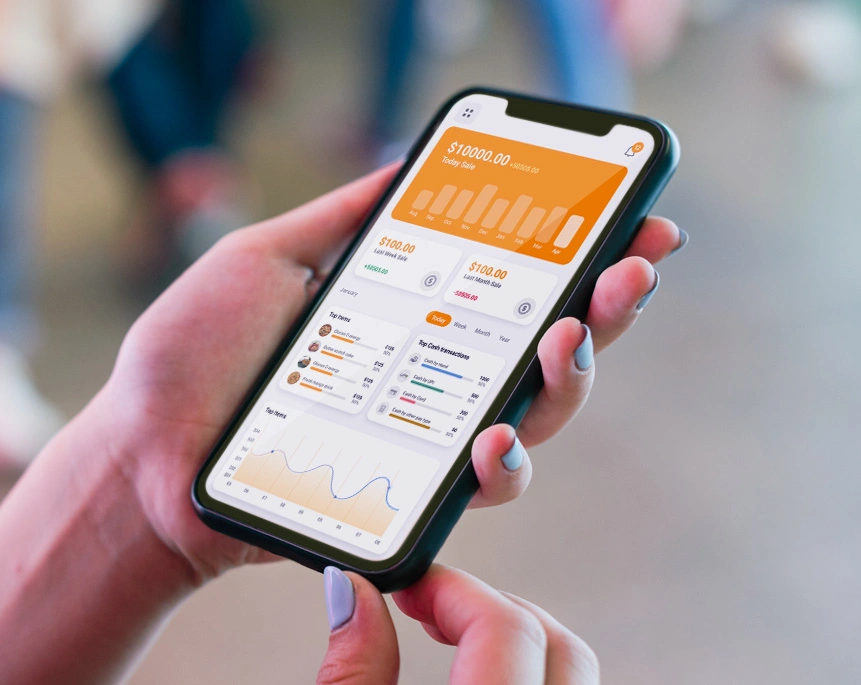
With LithosPOS, you can track sales and inventory in real time on the dashboard. It works on iPhones, iPads, Android devices, and PCs, so you can check your numbers from the counter or from home. The Dashboard App puts your key data in one place, and ingredient-level tracking helps you see the true cost of each drink.

Still choosing? Read our guide to compare POS software before you buy.

Cafe Sales Report FAQs

What is the most profitable drink in a coffee shop?

Simple drinks such as filter coffee, espresso, and cold brew usually have the lowest ingredient cost, so they earn a high margin per cup. However, the most profitable drink overall depends on how many cups you sell. Multiply profit per cup by cups sold to find out.

How do I calculate profit per drink?

Subtract the ingredient cost from the selling price. For example, a latte sold at $4.50 with $1.10 of ingredients earns $3.40 per cup. That is about a 76% margin.

What is a good cost of goods percentage for a cafe?

One industry guide lists 25% to 35% of revenue as a typical benchmark for cafe cost of goods, and you can read it in The Restaurant Warehouse's coffee shop profit margin guide. Individual drinks vary. To check yours, divide the drink's cost by its price. In our example, the latte costs $1.10 and sells for $4.50, so its cost is about 24%.

How often should I check my cafe sales report?

Take a quick look every week. Then do a deeper review once a month, using at least four weeks of data.

What is menu engineering?

It is a method that uses sales data and profit per item to decide what to promote, rework, or remove. It sorts items into Stars, Plowhorses, Puzzles, and Dogs.

Can cafe POS software track ingredient costs?

Yes. LithosPOS tracks inventory at the ingredient level. It deducts the milk, beans, and syrup used in each drink recipe, which helps you see real costs and reduce waste.

Should I remove drinks that sell slowly?

Not always. A slow drink with high profit is a Puzzle, and better promotion can help it. Remove a drink only when both its sales and its profit are low, and a recipe change does not fix it.

Find Your Most Profitable Drinks with a Free Trial

Stop guessing and start reading your numbers. Start your 14-day free trial or book a demo to see how LithosPOS reports work in a real cafe. You can also view pricing.
Categories
Retail POS

Dead Stock in Supermarkets: The Silent Profit Killer Draining Your Margins

Every supermarket owner tracks sales closely. Daily revenue, footfall, best selling categories all get attention. But one number rarely gets checked, and it often costs the most. That number is dead stock in supermarkets.

This loss doesn’t show up right away. It builds slowly, shelf by shelf. A stock count or a write off report finally reveals the damage. Supermarkets and mini marts stock perishables, fast moving FMCG items, and hundreds of SKUs. This makes dead stock in supermarkets one of the biggest hidden threats to profit. Retailers lose an estimated $52 billion a year to shrink, and food waste drives much of that number.

What Counts as Dead Stock in Supermarkets?

Dead stock in supermarkets means inventory that hasn’t sold within a reasonable window. It’s unlikely to sell at full price, if at all. Common examples in supermarkets and mini marts include:

  • Perishables past their expiry date (dairy, bakery, fresh produce)
  • Seasonal items left over once demand drops
  • Slow moving SKUs bought on guesswork
  • Duplicate items competing for the same shelf space

Expired stock is the most visible form of this problem. But slow moving dead stock does just as much damage. It ties up capital. It occupies shelf space. Staff often discount it heavily just to clear it, cutting margins further.

Why Dead Stock Builds Up

Most supermarkets don’t create dead stock on purpose. Poor visibility into what’s actually moving causes it. Here are the main drivers.

No expiry tracking at the SKU level. Staff can’t flag items nearing expiry without a proper system. Perishables sit unnoticed until it’s too late to discount or move them.

Reordering based on instinct. Staff often set reorder quantities from memory or rough guesses. This leads to over ordering items that don’t move fast enough.

No visibility across locations. One branch might run low on an item. Another branch might sit on a surplus of the same item. Centralized visibility would catch this imbalance early.

Disconnected manual processes. Purchase, sales, and stock data often live in separate spreadsheets or systems. This makes it nearly impossible to catch slow movers before they turn into dead stock.

What Dead Stock Actually Costs You

Dead stock does more than sit unsold. It creates real costs across the business.

  • Capital gets locked into products that generate no return
  • Shelf space goes to items that don’t sell instead of ones that would
  • Holding costs rise, including refrigeration for perishables that never move
  • Steep discounts recover only a fraction of the original cost
  • Staff lose time counting and disposing of unsellable stock

Even a small monthly percentage of dead stock adds up fast. Across hundreds of SKUs, this loss becomes a significant annual hit. Most owners never see the true number because it’s spread so thin across the catalog.

How POS Software Prevents Dead Stock in Supermarkets

Preventing dead stock isn’t about stocking less. It’s about stocking smarter. The right inventory management features give owners the visibility to catch problems early.

Real time stock tracking shows what’s selling and what isn’t. Staff can then reorder based on actual demand instead of guesswork.

Low stock and fast mover alerts help staff prioritize high demand items. This also helps avoid excess orders on slow sellers.

Multi location visibility lets you transfer stock between stores. Surplus in one branch can cover a shortage in another instead of expiring unused.

Centralized purchasing gives full visibility into stock levels across every branch. This cuts down on duplicate or unnecessary orders.

These tools turn inventory management proactive instead of reactive. Staff can catch slow movers early enough to discount them, transfer them, or simply order less next time.

Frequently Asked Questions

What causes dead stock in supermarkets?
Over ordering, poor sales visibility, and weak expiry tracking cause most dead stock in supermarkets. Products sit unsold until they expire or lose value.

How does POS software reduce food waste?
Real time inventory tracking flags slow moving and near expiry items early. Staff can then discount, promote, or redistribute stock before it becomes a total loss.

Can POS software track expiry dates?
Yes. Modern POS solutions track expiry sensitive inventory at the SKU level. This helps staff act on items nearing expiry before they become unsellable.

Does multi store visibility help prevent dead stock?
Yes. Centralized visibility lets businesses transfer surplus stock between stores. This reduces the chance of it going unsold anywhere.

About LithosPOS

LithosPOS builds an all in one POS solution for supermarkets, mini marts, and retail stores of every size. It handles fast barcode and weighing scale billing, real time inventory tracking, and multi location management from a single dashboard. Retailers use LithosPOS to cut manual work, reduce waste, and keep shelves stocked with what actually sells.

Stop Dead Stock Before It Costs You More

Dead stock in supermarkets is one of the easiest profit leaks to miss and one of the simplest to fix. LithosPOS gives you real time inventory tracking, low stock alerts, and multi location control in one dashboard. Catch waste before it hits your bottom line.

Start your free 14 day trial or book a live demo to see exactly where your inventory stands.

Categories
Restaurant POS

The 60-Second Rule: How Instant Order Sync Changes the Guest Experience

A guest orders a medium-rare steak with no onions, then glances at their watch. The next 60 seconds decide everything. Does that order reach the kitchen exactly as spoken? Or does it turn into a mix-up that costs your restaurant a repeat customer?

That one-minute window sits between a waiter taking an order and the kitchen starting on it. It has quietly become one of the most important metrics in restaurant service today. Call it the 60-Second Rule: the shorter and more accurate that gap, the better your dining experience holds up under pressure. Instant order sync is what closes it.

Why the First 60 Seconds Matter So Much

Order accuracy is not a minor operational detail. Industry benchmarks and puts average order accuracy across major restaurant chains between 86 and 89 percent. That means roughly 1 in 7 or 8 orders leaves the kitchen wrong, even at heavily audited locations. Independent, full-service restaurants rarely get audited this closely. They have little reason to assume they do better.

Kitchen staff rarely cause these errors by misreading a ticket. The real problem starts earlier. A handwritten note gets smudged. A waiter mishears a modifier. A scrap of paper never makes it past the pass. One widely cited industry study traces most quick-service order errors back to human input at the point of capture, not to kitchen preparation.

This is exactly where instant order sync earns its place in your restaurant’s tech stack.

What Instant Order Sync Actually Does

A waiter app connects directly to your POS software and removes the paper step entirely. The waiter enters the order tableside, on a phone or tablet. It lands on the kitchen display or KOT printer within seconds, not minutes. Nobody walks to a fixed POS terminal. Nobody re-keys the order. No modifier gets dropped along the way.

Instant order sync compresses that critical 60-second window in a few concrete ways:

  • Order management happens in real time. Waiters can adjust or confirm details before they leave the table.
  • Instant updates put the order in front of kitchen staff the moment the waiter taps send, not whenever they find a free terminal.
  • Table management ties every order to a specific table number, so nothing gets mixed up during a rush.
  • Order accuracy improves because the process skips manual re-entry, the step where details usually get lost.

The guest’s request moves from their mouth to the kitchen’s screen almost instantly. Nothing gets lost in between.

The Guest Experience Impact

Guests rarely think about POS software or kitchen display systems. They notice two things: does their food arrive correctly, and how long did it take? A restaurant that nails both consistently builds the kind of trust that shows up in repeat visits and better reviews.

Instant order sync affects the guest experience in a few visible ways:

  1. Shorter perceived wait times. A waiter can confirm an order went through the moment they took it. Guests feel attended to before the food even arrives.
  2. Fewer awkward corrections. A wrong plate damages a dining experience fast, especially for allergies or dietary requests.
  3. Smoother payment handoff. Integrated payments at the table mean guests pay as soon as they’re ready, not whenever a waiter prints the check.
  4. More consistent service during a full house. Waiters no longer queue at one terminal to enter orders, so service stays steady during peak hours.

Restaurants juggling dine-in alongside delivery and online orders feel this benefit even more. Off-premises demand now makes up a larger share of restaurant traffic than it did a few years ago. Front-of-house teams already have less time to walk back and forth to a fixed POS station.

Turning Instant Order Sync Into a Habit

Installing an app is only step one. Instant order sync works best paired with a few operational habits:

  • Standardize how waiters enter modifiers, so allergy notes and substitutions get captured the same way every time.
  • Treat the kitchen display as the single source of truth. Don’t let verbal shortcuts creep back in during rushes.
  • Track how long orders take to move from table to kitchen. Reports and analytics tools make this easy to monitor over time.
  • Train new staff on the app before their first live shift. Confidence with the tool speeds up every order after that.

Restaurants that measure this window, instead of assuming it takes care of itself, tend to see the biggest gains in both accuracy and guest satisfaction.

The Takeaway

The 60-Second Rule boils a complex problem down to one question: how fast and accurately can a spoken order become a kitchen-ready ticket? Instant order sync closes that gap almost entirely. It cuts the errors that come from paper tickets and manual re-entry, and it gives guests a faster, more attentive dining experience.

Does your team still rely on paper pads or a single fixed terminal? That 60-second window is probably working against you. Tableside ordering and real-time kitchen sync, through a tool like the LithosPOS Waiter App, closes it fast, without changing your menu or your staff.

FAQ

What is instant order sync in a restaurant? Instant order sync means an order a waiter takes at the table reaches the kitchen display or printer within seconds, with no paper step or manual re-entry in between.

What is the 60-Second Rule? It describes the short window between a waiter taking an order and the kitchen receiving it. The faster and more accurate that handoff, the better the guest experience holds up.

How does a waiter app improve order accuracy? A waiter app lets staff enter orders directly on a handheld device. That removes manual re-entry and paper tickets, the two leading causes of order mistakes.

Does instant order sync work with kitchen display systems? Yes. Waiter apps sync directly with a kitchen display system or KOT printer, so kitchen staff see each order the moment it’s placed.

Can instant order sync help during busy hours? Yes. Waiters skip the queue at a fixed POS terminal, so table turnover improves and service stays consistent even during a full house.

Is instant order sync only useful for large restaurants? No. Independent restaurants, cafes, and quick-service spots all benefit from removing the paper step. Order errors and slow service hurt small operations just as much as large chains.

How does instant order sync affect payments? Most waiter apps also support tableside payment processing, so guests can pay as soon as they’re ready instead of waiting for a printed check.

Categories
Customer experience

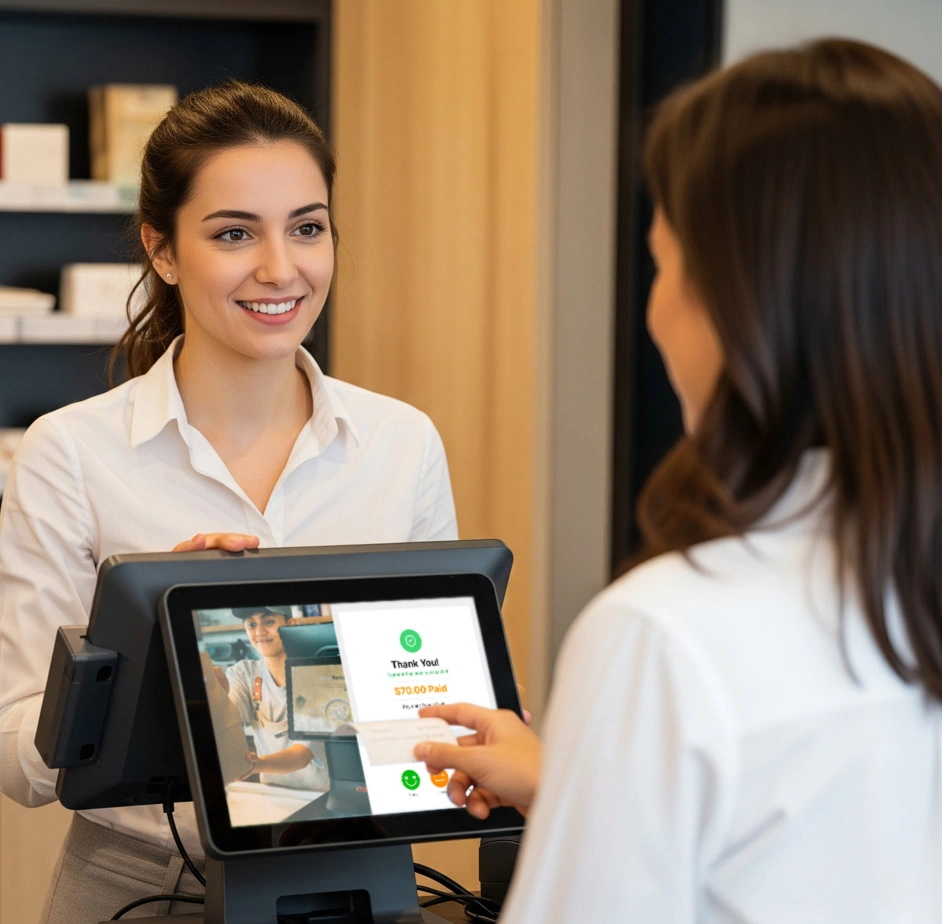
Nothing to Hide: How Real-Time Bill Displays Turn Skeptical Customers Into Repeat Ones

Ever watched a customer squint at the register, waiting to see the final number before they hand over their card? That small pause is doubt, and doubt, even for a second, chips away at trust. A real-time bill display removes that pause entirely, showing customers exactly what they owe as it adds up, item by item.

A customer display screen puts this real-time bill display in front of every customer. As items are scanned or an order is entered, the customer sees it happen line by line, in real time. No surprises at the end, no “wait, what was that charge for?”

Why a Real-Time Bill Display Builds Trust

Trust at checkout isn’t built with a receipt handed over after the fact. Customers build it during the transaction, watching their own bill add up. Billing stops being something that happens to them. It becomes something they’re part of.

This shift matters more than most retailers realize. A 2026 HubSpot survey of thousands of shoppers and marketers found that transparency has overtaken price as the single trait consumers value most in a brand. Businesses that openly shared pricing details saw measurably higher satisfaction scores (per Amra & Elma’s 2026 brand trust report). A customer who feels informed feels respected. And a customer who feels respected comes back.

The Hidden Cost of Checkout Without a Real-Time Bill Display

Without a real-time bill display, customers see only two things: the cashier’s screen, turned away from them, or a printed receipt at the end. That gap between “what am I being charged” and “here’s your total” is where doubt creeps in, even when nothing dishonest is happening.

A wrong price tag, a manager override, an extra item scanned twice: these small errors happen at every store. Staff usually fix them instantly. But if the customer finds out only after the fact, or has to ask, the fix doesn’t erase that flash of suspicion. Multiply that across hundreds of transactions a day. A store can quietly earn a reputation for feeling less trustworthy, even while doing nothing wrong.

A real-time bill display removes that gap by design. The customer sees the same running total the cashier sees, in the same moment. Doubt never gets a chance to form.

The Repeat-Customer Effect of a Real-Time Bill Display

First-time customers are naturally more cautious. They don’t yet know if a store rounds up, adds hidden fees, or fumbles totals. A real-time bill display answers that unspoken question before it’s even asked. Over time, that consistency turns a one-off visit into a habit. It also pairs naturally with other trust-building tools like a customer loyalty program that rewards customers for coming back.

This matters even more for businesses still building brand recognition. A well-known chain can lean on its reputation to earn a shopper’s benefit of the doubt. A newer or independent store doesn’t have that cushion. Every checkout is effectively a first impression. A real-time bill display helps smaller retailers earn trust fast, without years of brand history behind them.

How a Real-Time Bill Display Fits Into Modern POS Setups

A real-time bill display typically runs on a second screen connected to the same point-of-sale system the cashier uses. Both screens update together as items are scanned or an order is entered. Staff manage nothing extra. There’s no separate device and no manual step. This is what sets it apart from simply turning a cashier’s screen around. A dedicated display serves the customer’s view alone. It’s often larger, clearer, and sits at eye level.

Many setups go further and use the same screen for contactless QR code and NFC payments. Customers can view, confirm, and pay from one display. When the register sits idle between customers, the screen can rotate through promotions or offers instead of sitting blank. That turns a trust feature into a small marketing channel too.

Beyond the Bill: What Else a Display Screen Can Do

A real-time bill display isn’t the only job a second screen can do at checkout. The same display can also show contactless QR payment options or promote in-store offers during idle moments, turning a trust tool into a small revenue driver as well.

FAQ

Does a customer display screen slow down checkout? No. It runs in sync with the POS in real time, so it adds visibility without adding steps or delay to the transaction.

Is a customer-facing display only useful for large retailers? No. Small and mid-sized retail stores and restaurants benefit just as much, since first-time customer trust matters most when a business doesn’t yet have brand recognition to fall back on.

What’s the difference between a receipt and a real-time bill display? A receipt confirms a transaction after it’s done. A real-time display shows the transaction as it happens, which is what removes the moment of doubt before payment.

Can a real-time bill display be used for anything besides billing? Yes. The same screen can show contactless payment QR codes and rotate through promotions or offers when the register is idle between customers.

Does adding a customer display require new hardware for every till? Most POS setups support adding a display per checkout counter, syncing to the same order data as the main register, so it can be added counter by counter rather than as a full system overhaul.

The Takeaway

A customer display screen isn’t just a convenience. It’s a quiet, constant trust signal. It tells every customer, every time: nothing to hide, nothing to double-check.

Categories
Retail POS

Open a New Store in Days, Not Months: The Centralized POS Setup Guide

Opening a new store should feel like a milestone, not a fire drill. Yet for most growing retail chains, the weeks before launch are the most stressful part of the entire expansion. Staff have to rebuild menus. They re-enter item catalogs by hand. They re-train the team on a new system and double-check pricing across every register. By the time the doors open, the team is exhausted. Small errors have already crept into the stock count.

The good news: most of this pain is avoidable. It rarely comes from the physical build-out. It comes from setting up store operations the slow way, one system at a time, instead of using a centralized POS setup that lets a new location inherit everything the business has already built.

Why Store Opening Speed Matters More Than Ever

Retail expansion is picking back up. According to a Telsey Advisory Group report covered by Retail Dive, net store openings in the US grew only modestly in fiscal 2025. Analysts project the pace will roughly double in 2026, led by off-price, beauty, and discount retailers. Chains that open reliably and repeatedly are the ones capturing that growth. Boot Barn, for instance, is targeting 65 to 70 new stores in fiscal 2026 after opening 60 in fiscal 2025, according to CRE Daily. That pace only works when the back-end setup for each new location is fast and repeatable.

The lesson for independent retailers and small chains is the same. Speed to open is now a competitive advantage, not just an operational nice-to-have.

What “Centralized POS Setup” Actually Means

A centralized setup keeps your entire product catalog, pricing rules, tax settings, staff roles, and loyalty program in one place. Every store location pulls from that single source instead of starting from scratch.

Instead of manually re-entering thousands of items at a new branch, a manager can add the new store in a few clicks and instantly replicate the existing catalog to it. LithosPOS’s multi-store features build around exactly this idea. Add a new store location, replicate the items instantly, and the branch goes live faster instead of waiting days for someone to rebuild the menu or shelf list by hand.

This single change removes the biggest bottleneck in most new store launches: data entry.

The Centralized Setup Checklist for a Faster Launch

1. Set Up the Store Profile First

Before anything else, create the store’s profile inside your account: address, tax rules, operating hours, and currency if it differs from your other branches. LithosPOS’s store settings guide walks through adding a new store using the same steps you used for your first location, so you don’t reinvent the process.

2. Replicate the Item Catalog, Don’t Rebuild It

This is where most of the time savings come from. Rather than typing in every product, price, and category again, pull the existing catalog into the new store. Adjust only what’s genuinely different, such as local pricing or a region-specific item.

3. Assign Warehouses and Stock Levels

New locations need their own inventory tracking from day one. Set up the warehouse for the new store so you can track stock movements, purchase orders, and transfers from the very first sale. LithosPOS’s warehouse management setup keeps inventory control consistent across every branch, including the newest one.

4. Set Staff Roles and Permissions in Bulk

Instead of building a staff hierarchy from scratch, clone role templates from an existing store and adjust employee assignments. This keeps access levels consistent and avoids security gaps during a chaotic opening week.

5. Connect Reporting Before You Go Live, Not After

Once you create the store, it should immediately appear in your combined reporting dashboard alongside every other branch. This lets owners spot slow sales days or stock issues in the new location right away, instead of waiting weeks for a manual report.

6. Test Offline Mode Before Opening Day

Internet drops happen, especially during a new store’s first few weeks while the team is still finalizing network setup. A POS solution that keeps working offline, then syncs sales once the connection returns, protects the store from downtime during its most important days.

The Payoff: What Centralized Setup Saves You

  • Time: New stores can go from signed lease to first sale in days rather than weeks, since the catalog, pricing, and staff structure already exist.
  • Accuracy: Replicating data instead of re-entering it removes the pricing mismatches and missing items that usually show up in a store’s first month.
  • Visibility: Owners get real-time performance data on the new store from day one instead of flying blind during the critical opening period.
  • Consistency: Customers get the same pricing, promotions, and loyalty experience whether they’re at the original store or the newest branch.

This same principle scales with the business. LithosPOS’s multi-store retail management approach connects every branch’s sales, staff, and inventory data to a single dashboard. A chain with five stores or fifty can run on the same amount of daily effort.

Frequently Asked Questions

How long does it take to set up a new store with centralized POS software? With a centralized setup, most retailers can configure a new store and go live within a few days. The exact timeline depends on how much local customization you need, but the core catalog, pricing, and staff structure carry over instantly instead of requiring a rebuild.

Do I need to re-enter my product catalog for every new store? No. A centralized POS solution lets you replicate your existing item catalog to a new store location in a few clicks. You only need to adjust items that are genuinely different, like region-specific pricing.

Can a new store location work if the internet isn’t fully set up yet? Yes, as long as the POS software supports offline mode. Sales continue uninterrupted and sync automatically once the connection comes back, which matters most during a new store’s first few weeks.

Will reports from the new store show up with my other locations automatically? Yes. Add a new store under a centralized account, and its sales, inventory, and staff data feed into the same combined dashboard you use for every other branch, so owners can compare performance from day one.

What’s the biggest reason new store openings get delayed? Manual data entry is usually the biggest bottleneck, particularly rebuilding the item catalog, pricing, and staff permissions from scratch for each new location. Centralizing this data removes most of that delay.

Categories
Restaurant POS

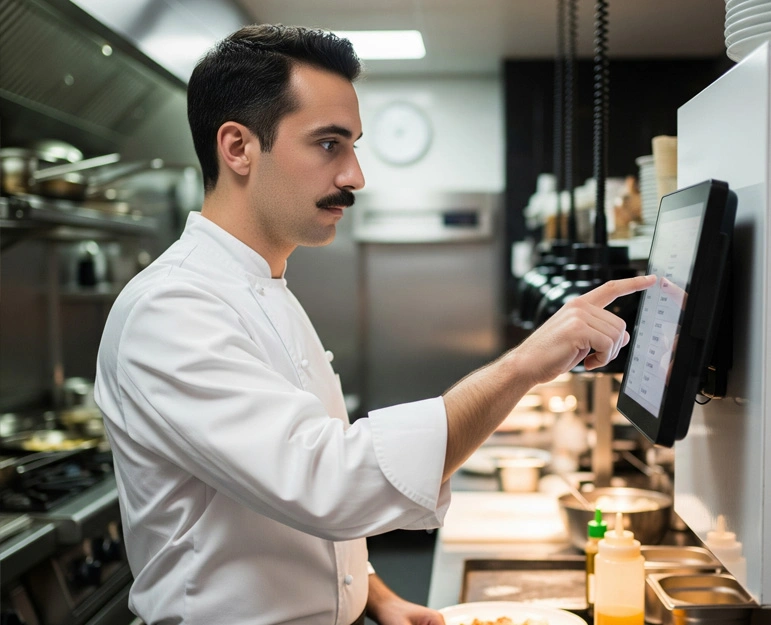
POS with Kitchen Display System: Why Restaurants Need Both

A restaurant running a POS solution without a connected kitchen display system only solves half the problem. That’s why more restaurants are moving to a POS with kitchen display system setup instead of running two disconnected tools. The POS handles the front of house. It takes orders, processes payments, and tracks sales. But the moment an order leaves the counter, a disconnected setup forces staff back to shouted tickets, printed slips, or sticky notes on a rail. As a result, orders get lost, tickets go missing, and customers end up with the wrong dish.

Pairing a POS software with a kitchen display system closes that gap. Together, they turn order-taking and food preparation into one continuous workflow. Instead of two separate systems, the restaurant runs one connected process.

What a POS with Kitchen Display System Actually Solves

Order accuracy is a documented problem across the industry, not just an occasional mishap. In fact, nearly 90% of consumers report receiving an incorrect food order at some point. Much of that traces back to manual handoffs between the front and back of house. A kitchen display system removes that handoff. It sends orders straight from the POS to the kitchen screen the instant staff places them, with modifiers, allergies, and special instructions attached exactly as entered.

The kitchen technology market reflects how seriously restaurants take this problem. Analysts project the global kitchen display system market to grow at roughly 11.2% a year between 2026 and 2035. Quick-service and fast-casual restaurants are driving much of that growth, as they push to improve throughput and cut order errors during high-volume service.

Why Restaurants Need Both, Not Just One

A POS alone can’t manage kitchen workflow. It’s built for transactions like ringing up items, applying discounts, and processing payments. Once staff places the order, the POS’s job is largely done. Without a KDS, that order still has to reach the kitchen through a printer, a call-out, or a runner carrying a slip.

A KDS alone can’t manage the business side, either. A kitchen display system organizes and prioritizes tickets well. However, it has no visibility into sales data, payment processing, staff scheduling, or inventory levels. So it needs a POS solution to feed it clean, structured order data in real time.

When the two work together, a few things happen that neither system can do alone:

  • Orders route automatically from the point of sale to the exact kitchen station responsible for preparing them, whether that’s grill, fry, or cold prep.
  • Modifiers and allergy notes travel with the order, reducing the risk of a ticket getting simplified or misread during a verbal handoff.
  • Course timing syncs across the kitchen, so appetizers, mains, and desserts fire at the right moment instead of all arriving in the kitchen at once.
  • Multiple order channels consolidate into one view. Dine-in, takeaway, and third-party delivery orders all land on the same display in the sequence they were received, instead of on separate printers competing for attention.
  • Managers get real-time visibility into ticket times and kitchen bottlenecks, data a paper-ticket kitchen simply doesn’t generate.

The Operational Impact

Restaurants that connect their POS software with a kitchen display system typically see the benefit show up in three places:

  1. Speed of service. Orders reach the kitchen the moment staff enters them. This cuts the delay that comes from printing, walking, or relaying tickets verbally.
  2. Order accuracy. Fewer manual re-entries mean fewer chances for an item, modifier, or allergy note to get lost between the counter and the pass.
  3. Staff coordination. Color-coded, time-stamped tickets on a shared screen give kitchen staff a clear view of what’s next and what’s overdue, so no one needs to ask.

For multi-location or high-volume operations, this combination also generates data a paper-based kitchen can’t. Managers get average ticket times by station, peak-hour bottlenecks, and a clear read on which menu items slow down service. In other words, it’s information a manager can act on, not just observe.

Who Benefits Most

This pairing tends to matter most for:

  • Quick-service and fast-casual restaurants, where order volume and speed expectations are highest.
  • Multi-station kitchens (grill, fry, cold prep, bar) that need tickets split and routed to the right screen automatically.
  • Restaurants juggling multiple order channels, including dine-in, takeaway, and third-party delivery apps, all of which need to land in one consolidated kitchen queue.
  • Multi-location brands that want consistent kitchen performance data across every outlet.

A single-counter café with low order volume may get by without a KDS for longer. But once a restaurant adds a second order channel, a second kitchen station, or a second location, the case for connecting POS and KDS becomes hard to ignore.

Getting Started

If your restaurant currently runs a POS solution without a connected kitchen display, start simple. First, check whether your existing POS software already supports a native KDS integration. Moving to a single POS with a kitchen display system platform is usually easier than investing in a separate, standalone system. A connected setup, where the POS and KDS share the same platform, also avoids the sync issues and extra support overhead that come from stitching together two unrelated vendors.

Ready to see the difference for yourself? Book a free demo or start your free trial today and connect your POS software with a kitchen display system on one platform.

Frequently Asked Questions

What is the difference between a POS and a kitchen display system?
POS software handles order entry, payments, and sales reporting at the front of house. A kitchen display system receives those orders and displays them on a screen in the kitchen, replacing printed tickets and organizing preparation by station and priority.

Do small restaurants need a kitchen display system?
Smaller, single-station operations can sometimes manage with printed tickets, but even small kitchens see fewer errors and faster ticket times once orders route digitally, especially if they handle takeaway or delivery alongside dine-in.

Can a kitchen display system work without a POS?
Technically, some standalone KDS units exist, but they lose most of their value without a connected POS, since order data, modifiers, and payment status all originate at the point of sale.

How does a KDS improve order accuracy?
It removes manual handoffs. Orders travel from the POS to the kitchen screen exactly as entered, including modifiers and allergy notes, instead of being written down, printed, or relayed verbally.

Does a connected POS and KDS help with delivery orders?
Yes. Orders from third-party delivery platforms can route into the same kitchen display alongside dine-in and takeaway orders, giving kitchen staff a single queue instead of separate printers for each channel.

Is it better to buy POS and KDS from the same provider?
Generally yes. A POS and KDS built on the same platform sync in real time without middleware, while pairing two unrelated systems often introduces lag, integration costs, and separate support channels.

Categories
Retail POS

Multi-Store Retail Management: How to Control Sales, Staff, and Stock from One Dashboard

How do retailers manage multiple store branches?

Retailers manage multiple store branches by connecting every location to one centralized retail management system. Instead of checking separate registers, spreadsheets, and staff schedules at each outlet, a central dashboard pulls live sales, inventory, and staff data from all branches into a single view. This lets a retailer compare branch performance, move stock between locations, and manage staff shifts without visiting each store in person.

That single sentence answers the question, but the real work is in how that centralized setup actually functions day to day. Here’s what it looks like in practice.

The problem with running stores on separate systems

Most retailers don’t plan to end up with five different systems for five stores. It happens gradually. One branch opens with a basic POS. A second branch gets added with a slightly newer setup. A third store inherits whatever the previous owner was using. Within a couple of years, the business is stitched together with spreadsheets, WhatsApp updates, and end-of-day phone calls.

The market data backs this up. Retail management software spending is growing quickly precisely because multi-store operations have become harder to run manually as businesses expand. And the operational pain is measurable: research on multi-location businesses found that a large share of them are still using disconnected tools for each site, and managers routinely lose hours a week just reconciling numbers across locations rather than making decisions with them (via industry multi-location statistics).

The result is a familiar set of headaches:

  • Sales visibility gaps: the owner doesn’t know which branch is performing well until the month-end report lands.
  • Stock imbalances: one outlet is overstocked on a product while another has been out of it for a week.
  • Staff scheduling confusion: shift swaps, attendance, and payroll are tracked differently at every branch.
  • Inconsistent pricing and promotions: a discount runs at one store but not another, confusing customers and staff alike.

A centralized dashboard exists to remove exactly these gaps by giving every store the same source of truth.

What “managing from one dashboard” actually means

A true multi-store retail management setup isn’t just multiple POS terminals reporting into a shared spreadsheet at the end of the day. It means real-time, two-way visibility: what happens at the counter in one branch is instantly reflected in the dashboard the owner or manager sees, from any device.

Here’s how that plays out across the three areas that matter most.

1. Sales: One view, every branch

Instead of pulling separate reports from each store, a manager can open a single dashboard and see:

  • Real-time sales totals per branch, product, and staff member
  • Which locations are trending up or down against targets
  • Best and worst-selling items store by store, so purchasing decisions are based on actual demand rather than guesswork
  • Consolidated end-of-day reconciliation, so closing five stores takes minutes instead of five separate phone calls

This is also where centralized reporting pays off beyond convenience. Retailers using unified, cloud-based platforms across channels and locations have reported meaningfully higher customer retention and faster order fulfillment compared to retailers still running disconnected, single-location setups.

2. Staff: Centralized rosters, local flexibility

Multi-store staff management usually breaks down in one of two ways: either every branch manager runs HR their own way, or head office tries to micromanage every shift from a distance, and it becomes unworkable.

A centralized system solves this by keeping structure at the top while leaving day-to-day flexibility at branch level:

  • One login for the owner or area manager to view attendance, shifts, and performance across every branch
  • Branch managers can still adjust their own local schedules without needing head-office approval for routine changes
  • Role-based access, so cashiers, branch managers, and the business owner each see only what’s relevant to them
  • Commission and incentive tracking that stays consistent across locations, instead of every branch calculating it differently

This matters more than it might seem. Multi-location businesses that lack centralized tools consistently report staffing consistency as one of their biggest operational struggles, and scheduling-related issues are a top driver of customer complaints in these businesses (source: industry statistics).

3. Stock: Real-time inventory, movable between branches

Stock is usually where multi-store retailers feel the most pain, and where a shared dashboard delivers the clearest win.

With centralized inventory management, a retailer can:

  • See real-time stock levels across every branch from one screen
  • Transfer stock between branches directly through the system, rather than manually driving inventory between stores
  • Set low-stock alerts per branch, so no single location silently runs out of a bestseller
  • Track shrinkage and stock discrepancies by branch, making it easier to spot where losses are happening

This is a widely documented problem in retail. Industry inventory research points to enormous global losses each year from stockouts and overstocks combined, a gap that mostly stems from not having a real-time, shared view of stock across locations (see 2026 inventory statistics). Retailers who’ve struggled with this exact issue may also find it useful to read our detailed breakdown of why retail inventory tracking is so hard and how to fix it.

Why a single dashboard changes decision-making, not just reporting

The real shift isn’t just “less manual work.” It’s that decisions get made faster and with better information.

When an owner can see, in real time, that one branch is low on a product another branch has in excess, that’s a same-day stock transfer instead of a lost sale. When staffing data across branches sits in one place, it’s easier to spot which location is understaffed during peak hours before it becomes a customer complaint. When sales data is consolidated, expansion decisions (which product line to push, which branch is ready for a second location) are based on actual numbers rather than instinct.

This is also why choosing the right POS software for a growing, multi-branch business matters more as a retailer scales past one location. A solution that works fine for a single store can become a genuine liability once there are three, four, or ten branches to manage.

What to look for in multi-store retail management software

If a retailer is evaluating options, a few capabilities separate systems that genuinely support multi-branch growth from ones that will need to be replaced in a year or two:

  1. Centralized dashboard with branch-level drill-down: not just totals, but the ability to click into any single branch’s detail.
  2. Cloud-based access: the owner shouldn’t need to be physically present at a branch to see what’s happening there.
  3. Inter-branch stock transfer built into the system: not a manual, off-platform workaround.
  4. Role-based staff access: branch managers, cashiers, and owners each need different views and permissions.
  5. Consistent pricing and promotion control: the ability to push a discount to all branches, or just specific ones, from one place.
  6. Consolidated financial reporting: daily, weekly, and monthly summaries across all locations without manual merging.

LithosPOS’s multi-store management features are built around exactly this: one dashboard, real-time sync across branches, and the ability to manage sales, staff, and stock without needing separate tools per store.

Frequently Asked Questions

How do retailers manage multiple store branches? By using a centralized retail management system that connects every branch’s sales, staff, and inventory data to a single dashboard, so decisions can be made in real time instead of relying on end-of-day reports from each store.

What is multi-store retail management software? It’s a system that lets a retailer with more than one physical location control sales tracking, staff scheduling, and stock levels across all branches from one central platform, instead of running each store on a separate, disconnected system.

Can stock be transferred between branches automatically? Most modern multi-store systems allow stock transfer requests to be raised, approved, and tracked directly within the platform, so inventory can move between branches without manual reconciliation afterward.

Do all branches need to use the same pricing? No. A centralized system typically allows a retailer to set uniform pricing across all branches, or apply branch-specific pricing and promotions, depending on local demand.

How does centralized staff management work across multiple stores? Owners or area managers get one login to view attendance, shifts, and performance for every branch, while individual branch managers retain control over day-to-day scheduling for their own location.

Is cloud-based multi-store management secure? Reputable cloud-based retail platforms use role-based access control and encrypted data storage, so only authorized staff can view or edit sensitive sales, staff, or financial data, regardless of which branch they’re logged in from.

What’s the biggest challenge in managing multiple retail branches? Inventory visibility is usually the biggest challenge. Without a shared, real-time view of stock across branches, retailers commonly end up with overstock at one location and stockouts at another.

How many branches does a retailer need before centralized management becomes necessary? Even with two branches, manually reconciling sales and stock becomes time-consuming. Most retailers find centralized management essential once they cross three or more locations.

Ready to run every branch from one screen? Book a free demo and see how LithosPOS brings your sales, staff, and stock together.

Categories
Retail POS

Why Manual Inventory Fails in Apparel Stores with Many Sizes and Colors

Manual inventory fails in apparel stores because every product has multiple variations, such as size, color, style, brand, and season. When these details are tracked on paper or spreadsheets, stock counts become outdated quickly. Apparel POS software helps by tracking each variant separately, updating stock after every sale, managing barcode billing, showing low-stock alerts, and giving accurate reports across branches.

Running an apparel store looks simple from the outside. A customer walks in, chooses a shirt, tries a size, picks a color, and pays at the counter. But behind that simple sale, inventory management is much more complex.

Unlike many retail businesses, fashion and apparel stores do not deal with single products only. One shirt may come in five sizes, six colors, and different styles. One pair of jeans may have waist sizes, length options, fits,s and washes. A boutique may sell seasonal collections where stock changes every few weeks.

This is why manual inventory often fails in apparel stores. Paper records, Excel sheets, ts and basic billing tools may work when the store is small. But as products, variants, and customers increase, manual tracking becomes slow, inaccurate, and difficult to control. Research from Auburn University, cited in Avery Dennison’s analysis of inventory accuracy, found that apparel retailers using traditional inventory methods average only around 65% inventory accuracy, a gap that technology-driven tracking can close significantly.

For apparel retailers, inventory accuracy is not just a backend task. It directly affects sales, customer experience, purchasing decisions, and profit margin.

Why Apparel Inventory Is Harder Than Normal Retail Inventory

Apparel inventory is different because one product can have many versions.

For example, a basic T-shirt may have:

  • 5 sizes: XS, S, M, L, XL
  • 4 colors: black, white, blue, green
  • 2 fits: regular and slim

That single product can quickly become 40 separate stock combinations. If the store owner tracks only “T-shirt” as one item, they will not know which size or color is actually available.

This creates common problems:

  • Staff may say an item is available when the required size is out of stock
  • Fast-moving colors may finish without notice
  • Slow-moving sizes may remain unsold for months
  • Reordering becomes guesswork
  • Branch transfers become confusing
  • Sales reports do not show the real demand pattern

This is where apparel POS software becomes important. It helps fashion stores track each product variation separately instead of treating all stock as one general item, using a proper inventory management system rather than a single running total.

The Biggest Problems With Manual Inventory in Apparel Stores

1. Size and Color Mismatch

The most common inventory issue in apparel stores is size and color mismatch.

A store may have 20 pieces of a dress in total, but that number does not help if customers mostly ask for medium size in black. Manual inventory may show that stock is available, but staff may later discover that only unpopular sizes or colors are left.

This leads to lost sales. A customer who cannot find the right size may not wait for restocking. They may buy from another store. With proper clothing store inventory management, each size and color can be tracked individually, so store owners can see exactly how many pieces are available for every variation.

2. Excel Sheets Become Outdated Quickly

Many apparel stores start with spreadsheets because they are simple and free. But Excel depends on manual updates. Every sale, exchange, return, purchase and stock transfer must be entered correctly.

In a busy fashion store, this is difficult to maintain. If staff forget to update a sale, the sheet becomes inaccurate. If two people edit different versions of the file, the stock data becomes confusing. If returns are not entered properly, reports become unreliable.

Excel can store data, but it does not automatically update inventory after billing. Apparel POS software updates stock in real time whenever an item is sold, returned, or transferred.

3. Staff Waste Time Searching for Stock

When inventory is not properly organized, staff spend too much time checking shelves, trial rooms, store rooms, and other branches.

This affects customer experience. A customer asking for a specific size expects a quick answer. If staff take too long to confirm availability, the customer may lose interest. Manual inventory also puts pressure on experienced staff, since new employees may not know where items are kept or which products are available in another branch.

A clothing store POS software can help staff search for items by name, barcode, size, color, category, or branch. This makes service faster and reduces dependency on memory.

4. Dead Stock Is Not Noticed Early

Dead stock is a serious problem in fashion retail. Apparel items lose value when trends change, seasons end or new collections arrive.

Manual inventory usually tells store owners how much stock they have, but not always how fast each item is moving. A store owner may realize too late that certain colors, sizes or styles are not selling, and by then the store may need heavy discounts to clear old stock.

Fashion inventory management software helps identify slow-moving items earlier so store owners can take action before stock goes dead. Useful actions include running limited-time discounts, moving stock to a better-performing branch, creating combo offers, avoiding repeat purchase of slow-moving styles, and promoting old stock before new arrivals.

5. Reordering Becomes Guesswork

In apparel retail, reordering should not be based only on total sales. Store owners need to know exactly which sizes and colors are selling.

For example, if blue shirts sell well only in medium and large sizes, reordering all sizes equally may create overstock in XS and XXL. This blocks cash and storage space. Manual records often do not give this level of detail, so store owners may buy too much of the wrong stock and too little of the right stock.

Apparel POS software helps retailers make smarter purchase decisions by showing sales trends by size, color, item, category and branch.

6. Multi-Branch Stock Becomes Difficult to Control

Manual inventory becomes even harder when a fashion business has more than one outlet.

A product may be out of stock in one branch but available in another. Without centralized inventory, staff may not know this, and the business may lose sales even when the item exists somewhere else. Multi-branch apparel stores also need to manage stock transfers carefully. If items are moved from one branch to another without proper tracking, both branches may show wrong stock numbers.

A POS software with multi-store inventory helps store owners view stock across branches and manage transfers with better control.

7. Returns and Exchanges Create Confusion

Fashion stores handle more exchanges than many other retail businesses. Customers may return an item because of size, fit, color or personal preference.

If returns are managed manually, inventory can become inaccurate. Staff may forget to add the item back to stock, enter the wrong size, or miss the original bill details, which creates problems in both stock management and customer service.

A good apparel POS software records sales, returns and exchanges properly, and helps staff check the original purchase and update inventory correctly.

8. Barcode Mistakes Slow Down Billing

Manual item selection at the billing counter can lead to wrong product entries, especially when many products look similar. For example, two shirts may have the same design but different sizes or colors. If staff choose the wrong item manually, inventory reports become incorrect even though the customer paid correctly.

Barcode billing reduces this problem. Each product variation can have a unique barcode, so the exact size, color and item is billed correctly. Barcode inventory software for apparel stores helps improve checkout speed and stock accuracy at the same time.

How Apparel POS Software Solves Manual Inventory Problems

Apparel POS software helps fashion stores move from guesswork to real-time stock control. Instead of depending on notebooks or spreadsheets, every sale and stock movement is recorded inside one connected POS software.

Important features include:

  • Variant-level inventory for size, color and style
  • Barcode generation and barcode billing
  • Real-time stock updates after each sale
  • Low-stock alerts for fast-moving items
  • Purchase and supplier tracking
  • Stock transfer between branches
  • Return and exchange tracking
  • Sales reports by product, category, size and color
  • Discount and seasonal sale management
  • Customer purchase history and loyalty tracking

These features help store owners understand what is really happening inside the business.

How LithosPOS Helps Fashion and Apparel Stores

LithosPOS helps fashion and apparel stores manage billing, inventory, discounts and multi-store operations from one POS software. For apparel retailers dealing with many sizes, colors and variants, LithosPOS makes it easier to track stock accurately. Store owners can manage product variations, generate barcodes, speed up checkout, apply discounts and view sales and inventory reports.

LithosPOS also supports multi-store control, which helps fashion retailers manage stock across branches without depending on separate files or manual updates. You can explore the full fashion and apparel POS software page for a closer look at how it works, or start a free trial directly.

Signs Your Apparel Store Has Outgrown Manual Inventory

Your store may need apparel POS software if:

  • Staff often cannot find the right size or color
  • Stock shown in records does not match actual stock
  • You depend on Excel for daily inventory updates
  • Old collections remain unsold for too long
  • You do not know which sizes sell best
  • Branch transfers are hard to track
  • Returns and exchanges create stock confusion
  • Billing staff manually search items during checkout
  • You reorder based on guesswork instead of reports

If these problems happen regularly, manual inventory is already limiting growth.

Key Takeaways

Manual inventory fails in apparel stores because fashion products have too many variations. Size, color, style, brand, season and branch-level stock cannot be managed accurately with paper records or basic spreadsheets.

Apparel POS software helps solve this by tracking every product variation, updating inventory in real time, supporting barcode billing and giving better sales reports. For fashion and apparel stores, better inventory control means fewer missed sales, less dead stock, faster checkout and smarter purchasing decisions.

FAQ

1. Why does manual inventory fail in apparel stores? Manual inventory fails because apparel products have many variations such as size, color, style and fit. When these are tracked manually, stock records become outdated quickly and store owners lose visibility into what is actually available.

2. What is apparel POS software? Apparel POS software is a retail POS solution designed to manage billing, inventory, variants, barcodes, discounts, returns and reports for fashion and clothing stores.

3. How does apparel POS software manage sizes and colors? Apparel POS software allows each product to be created with variants such as size, color and style. This helps the store track exact stock for every product combination instead of only tracking total quantity.

4. Is Excel enough for clothing store inventory management? Excel may work for very small stores, but it becomes difficult when the store has many products, sizes, colors, returns and branches. Excel does not automatically update stock after each sale unless everything is entered manually.

5. How does barcode billing help apparel stores? Barcode billing helps apparel stores scan the exact product variation during checkout. This reduces billing mistakes, improves checkout speed and keeps inventory records more accurate.

6. Can apparel POS software reduce dead stock? Yes. Apparel POS software can show slow-moving items, best-selling products, and stock aging. This helps store owners run discounts, transfer stock, or avoid buying too many of the items that do not sell.

7. Is apparel POS software useful for multi-branch fashion stores? Yes. Multi-branch fashion stores can use apparel POS software to view stock across outlets, transfer inventory, compare branch sales, and manage purchasing from one place.

Stop losing sales because of wrong stock counts, missing sizes, and manual inventory mistakes. Manage billing, variants, barcodes, discounts, and multi-store stock with LithosPOS apparel POS software. Start your 14-day free trial.

Categories
Restaurant POS

What POS Software Works Best for Food Trucks?

The complete 2026 guide for food truck owners who want faster service, smarter inventory, and zero downtime

Running a food truck is nothing like managing a traditional restaurant. You are working in a tight space, chasing locations, dealing with unpredictable connectivity, and serving a full lunch crowd in under 90 minutes. Every tool you use has to earn its place, including your POS software.

Most food truck owners make one of two mistakes. They either pick a POS built for brick-and-mortar restaurants and end up fighting the system every shift, or they go with the cheapest option and outgrow it fast. Neither works.

This guide breaks down exactly what to look for in a food truck POS software, which features actually matter, and how to choose one that fits your operation today and scales as you grow.

Why food trucks need a different kind of POS

A standard restaurant POS is designed for a fixed location with stable Wi-Fi, a full kitchen team, and a predictable customer flow. Food trucks operate under completely different conditions.

Space is limited. The average food truck has 60 to 80 square feet of working space. There is no room for bulky terminals, tangled cables, or multiple screens. Your POS setup needs to be compact enough to fit on a small counter without getting in the way of your crew.

Connectivity is inconsistent. Street corners, markets, festivals, and parking lots do not always have strong mobile signals. If your POS cannot process transactions offline, a dropped connection means a lost sale and a frustrated customer who walks away.

Lunch rushes are unforgiving. Food trucks often make the majority of their daily revenue in a one to two-hour window. Slow software, confusing interfaces, or payment delays during that window directly cut into what you earn.

You move. Your data should follow. Cloud-based POS software lets you access your sales reports, inventory levels, and customer data from anywhere, not just from the truck. That matters when you are planning for tomorrow’s location or ordering supplies on the go.

The 6 features that actually matter in a food truck POS

Not every feature in a POS brochure is relevant to a mobile food business. Here are the six that should be on every food truck owner’s checklist.

1. Offline mode that actually works

This is non-negotiable. Your POS must be able to take and process orders, including card payments, when there is no internet connection. Look for a system that syncs transactions automatically the moment connectivity is restored, with no manual steps required.

2. Fast, simple order entry

When there is a line of 30 people waiting, your staff cannot afford to navigate five screens to add a modification. The best food truck POS systems are built for speed. Menus are visual, modifiers are one tap, and the system gets out of the way and lets your team work.

3. Real-time inventory tracking

Running out of a key ingredient mid-service is one of the most avoidable problems in food truck operations. A good POS with built-in inventory management automatically deducts stock as items are sold and alerts you when something is running low. This keeps your menu accurate and prevents the awkward conversation of telling a customer what you do not have.

4. Multiple payment options

Cash, cards, contactless payments, Apple Pay, Google Pay, and QR code ordering are all expected by customers in 2026. A POS that only handles one or two payment types will cost you sales. Make sure the system you choose supports all major payment methods without needing separate hardware for each.

5. Cloud-based reporting and analytics

Your best business decisions come from understanding your data. Which menu items sell the most? Which location drives the most revenue? What time of day is your busiest? A cloud POS gives you access to real-time reports and analytics from any device, so you can plan smarter, cut waste, and focus on what is working.

6. Compact, mobile-friendly hardware

Tablet-based POS systems work best for food trucks. They take up minimal counter space, they are easy to mount or hold in hand, and they do not require the power setup that full terminal systems need. Look for a POS that runs on standard tablets and pairs with a small card reader for the most flexible setup.

Top POS software options for food trucks: a quick comparison

POS software Best for Offline mode Cloud-based Multi-location
LithosPOS All-size food trucks Yes Yes Yes
Square Solo / starter trucks Limited Yes Basic
Toast High-volume trucks Yes Yes Yes
Clover Feature-rich setups Yes Yes Limited
Lightspeed Multi-truck fleets Yes Yes Advanced

The right choice depends on your business size, the number of trucks you operate, and the markets you serve. Here is a closer look at what sets each apart.

LithosPOS: built for mobile, high-volume food businesses

LithosPOS is a cloud-based POS system designed for restaurants and retail businesses that need flexibility, speed, and multi-location control. For food truck operators, the LithosPOS Food Truck POS offers real-time inventory management that automatically tracks stock as orders go out, preventing mid-service shortages.

The system runs on tablets, takes up minimal space, and supports multiple payment types, including contactless and QR code ordering. Offline functionality keeps your operations running when connectivity dips, and cloud-based reporting gives you a full view of sales, performance, and stock levels, whether you are at the truck or planning your next day remotely.

For food truck owners who are also considering a physical location, a food court stall, or multiple trucks, LithosPOS supports multi-location management from a single dashboard. If you operate in a shared space, explore how LithosPOS handles food court operations as well.

Ready to try it yourself? Start your free 14-day trial – no setup fees, no commitment.

Square: good starting point for solo operators

Square is widely used among food truck owners just starting out because of its low upfront cost and straightforward setup. The free plan covers basic order management and payment processing, and the hardware is compact and affordable.

The limitations show as businesses grow. Offline card processing is restricted, advanced inventory tools require paid add-ons, and the reporting features lack the depth that growing food businesses need. It works well for simple operations but may not scale with you.

Toast: strong for high-volume trucks with complex menus

Toast offers solid kitchen display system support, ingredient-level inventory tracking, and strong offline capabilities. It is a good fit for food trucks running high transaction volumes or complex menus with multiple modifiers.

The tradeoff is cost. Toast’s monthly fees and hardware investment are higher than most other options, and the system was originally built for restaurants rather than mobile operations, which means some features feel less suited to the food truck context.

Clover: feature-rich with a learning curve

Clover offers a wide range of features through its app marketplace, strong CRM tools, and good order management. Advanced inventory management often requires third-party apps, adding cost and complexity. The startup costs are also higher, making it better suited to food trucks that have already validated their concept and are ready to invest in a more complete setup.

Which POS is right for your food truck?

  • If you are just starting out with a single truck and a simple menu, a mobile-first system with low upfront costs and basic reporting will get you going.
  • If you are running a busy truck with high daily transaction volumes, prioritize speed, strong offline mode, and kitchen display support.
  • If you operate or plan to operate multiple trucks, or want to expand into catering, a food court, or a physical space, choose a cloud-based POS with multi-location management built in.
  • If you sell across multiple channels including in-person and online pre-orders, look for a POS that keeps all your sales in one place without manual reconciliation.
  • If customer loyalty and repeat business are priorities, choose a system with built-in loyalty and rewards tools that work at the counter without extra steps.

5 questions to ask before choosing a food truck POS

  • Does it work fully offline, including card payments, not just cash transactions?
  • Can I access my sales data and inventory reports from my phone or laptop outside the truck?
  • Will it support me if I add a second truck, expand into catering, or move into a food court or physical location?
  • What payment types does it support, and is the hardware compact enough for my counter space?
  • What does the total cost look like, including monthly software fees, transaction fees, and hardware?

The food truck industry in 2026: what the numbers say

The food truck industry has grown significantly over the past decade and shows no signs of slowing. According to industry research from Statista, the food truck market continues to expand globally, driven by lower startup costs compared to traditional restaurants and growing consumer demand for diverse, street-level dining.

The National Restaurant Association reports that technology adoption is accelerating across food service, with a majority of operators identifying POS software as one of their top technology priorities. Food trucks that invest in the right POS technology tend to see improvements across three key areas: faster service during peak hours, better stock management that reduces waste, and cleaner data that helps them make smarter decisions about locations, menus, and pricing.

Frequently asked questions

What is the best POS software for food trucks in 2026?

The best POS software for a food truck depends on your operation size and needs. For food trucks that want real-time inventory control, multi-location scalability, and cloud-based reporting, LithosPOS Food Truck POS is a strong choice. Square suits solo operators with simple menus, while Toast and Clover work well for higher-volume trucks that need more advanced features.

Do food trucks need a POS system?

Yes. A POS system does much more than process payments. It tracks your inventory in real time, generates sales reports, supports multiple payment types, and helps you understand which items and locations perform best. For food trucks operating in fast-paced environments, a POS system directly affects how many customers you can serve and how accurately you manage your stock.

Can a food truck POS work without internet?

It depends on the system. Many POS platforms offer some form of offline mode, but not all support credit card processing when connectivity drops. Look for a POS that can handle both orders and payments offline, then automatically syncs all data once the connection is restored. LithosPOS includes full offline functionality designed specifically for mobile food businesses.

What hardware does a food truck POS need?

Most food truck POS setups run on a tablet paired with a compact card reader. This keeps the footprint small and avoids the power requirements of full terminal systems. Some operators also add a small receipt printer or kitchen display screen, depending on their workflow. LithosPOS works on iPad, Android tablets, and handheld terminals.

Can I manage multiple food trucks from one POS?

Yes, if you choose the right system. Cloud-based POS platforms with multi-store support let you manage inventory, menus, and sales reporting across all your trucks from a single dashboard. This becomes essential once you operate more than one truck or plan to expand into a food court or physical location.

Does LithosPOS work for food courts as well as food trucks?

Yes. LithosPOS is built for both mobile food businesses and multi-stall operations. If you run a food truck and also manage a stall in a food court, the same platform covers both with centralized reporting and inventory management.

The right POS makes every shift easier

A food truck’s success depends on speed, consistency, and making the most of every service window. The right POS software takes pressure off your team, keeps your inventory accurate, and gives you the data to make better decisions between shifts.

When evaluating your options, think beyond the price tag. Focus on offline reliability, ease of use during peak hours, and whether the system can grow with your business. A POS that works well today but cannot support a second truck, an online channel, or a food court stall tomorrow is a short-term solution.

LithosPOS is built for businesses that want cloud-based control, real-time inventory management, and the flexibility to serve customers across multiple locations and channels. Explore the full restaurant POS suite or go straight to the Food Truck POS page to see exactly how it fits your operation.


Categories
Restaurant POS

Restaurant POS with Online Ordering: How to Stop Losing Money to Delivery Apps

Delivery apps helped restaurants reach more customers, but they also created a serious profit problem. Every order that comes through a third-party delivery platform can reduce your margin through commission fees, manual order handling, menu mismatches, and customer data loss.

That is why many restaurants are now moving toward a restaurant POS with online ordering. Instead of depending only on delivery apps, restaurants can accept direct online orders, send them straight to the POS, manage takeaway and delivery from one place, and keep more control over revenue.

In this guide, we will explain how a restaurant POS with online ordering works, why it matters, and how it helps restaurants reduce delivery app dependency without losing online sales.

Why Delivery App Commissions Are Hurting Restaurant Profit Margins

Online food delivery is now a normal part of the restaurant business. Customers want to order from their phones, pay online, and receive food at home or pick it up quickly. For restaurants, this creates a big opportunity. But when most online orders come through third-party delivery apps, the restaurant loses control.

The biggest issue is commission. Delivery platforms usually charge restaurants a percentage of each order. Even when the restaurant gets more orders, the profit from each order may be lower. For small restaurants, cafes, cloud kitchens, and quick-service restaurants, this can quietly reduce monthly profit.

The problem is not only commission. Restaurants also face:

  • Manual order entry from delivery tablets
  • Wrong menu prices across platforms
  • Delayed kitchen communication
  • Missed or duplicated orders
  • No direct customer relationship
  • Limited access to customer data
  • Dependency on app rankings and promotions

This is why restaurants need a smarter system. A connected restaurant POS software can bring online orders, delivery, takeaway, dine-in, kitchen operations, and reporting into one workflow.

For restaurants already using LithosPOS, the goal is simple: manage more orders without losing control. You can connect your restaurant operation with the LithosPOS restaurant solution.

What Is a Restaurant POS with Online Ordering?

A restaurant POS with online ordering is a POS system that allows customers to place orders directly from your restaurant’s own online ordering page, website, QR code, or branded ordering platform. These orders are sent directly into the POS instead of being manually copied from another device.

This means the restaurant can manage:

  • Online orders
  • Takeaway orders
  • Delivery orders
  • Dine-in orders
  • Kitchen tickets
  • Menu items
  • Payments
  • Customer data
  • Sales reports

from one connected system.

A normal online ordering form only collects orders. A POS-integrated online ordering system does more. It connects the order to billing, kitchen display, inventory, payment, delivery, and reporting.

LithosPOS online ordering helps restaurants accept direct orders and manage them inside the POS workflow.

Direct Online Ordering vs Third-Party Delivery Apps

Third-party delivery apps are useful for discovery. A new customer may find your restaurant through an app. But depending only on these platforms can be risky.

Direct online ordering gives your restaurant more control.

Third-party delivery apps:

  • Good for visibility
  • Commission on each order
  • Limited customer ownership
  • Platform controls ranking
  • Restaurant depends on app policies
  • Multiple tablets may create confusion

Direct online ordering:

  • No platform dependency for every order
  • Better control over customer relationship
  • Orders go directly to your POS
  • Easier menu and price control
  • Better repeat customer marketing
  • More profit stays with the restaurant

The best strategy is not always to remove delivery apps completely. A better strategy is to stop depending on them for every order. Use third-party apps for new customer discovery, but push repeat customers to your own direct online ordering system.

According to Toast’s Restaurant Technology Report, restaurants that use their own direct ordering channels see significantly better margin retention compared to those fully dependent on third-party platforms.

How POS-Integrated Online Ordering Works

A POS-integrated online ordering system for restaurants removes the gap between customer ordering and restaurant operations.

Here is the simple flow:

  1. Customer visits your online ordering page
  2. Customer selects items, modifiers, and order type
  3. An order is placed for delivery or pickup
  4. Order appears directly in the POS
  5. Kitchen receives the order through KOT or the kitchen display
  6. Staff prepares, tracks, and completes the order
  7. Sales and customer data are saved in reports

This reduces manual work. Staff do not need to read an order from one tablet and type it again into the POS. That one change can reduce mistakes, save time, and speed up order preparation.

For restaurants handling delivery orders, LithosPOS also offers a delivery app solution that gives better control over your own delivery operation instead of depending completely on third-party platforms.

If you are dealing with common operational challenges like this, read our guide on restaurant order fulfillment to understand how connected systems can help.

Benefits of Using Your Own Online Ordering System

1. Reduce Delivery App Commission Pressure

The biggest benefit is margin protection. When customers order directly from your restaurant, you reduce dependency on commission-heavy delivery platforms. Even if you still use third-party apps, direct ordering gives customers another path to buy from you.

2. Own Your Customer Data

When customers order through third-party apps, the platform often controls the customer relationship. With direct online ordering, your restaurant can collect useful customer data such as order history, phone number, email, favorite items, and repeat purchase behavior.

This helps with loyalty campaigns, SMS offers, email marketing, and customer retention. LithosPOS loyalty program supports restaurants in building stronger repeat customer relationships.

3. Avoid Duplicate Order Entry

Manual order entry is one of the biggest causes of restaurant mistakes. If staff need to copy orders from delivery tablets into the POS, errors can happen. Items may be missed, modifiers may be entered wrongly, and kitchen preparation can be delayed.

A POS system for restaurants with online ordering sends orders directly into the system, reducing manual work. This is especially important for restaurants managing high order volumes, as covered in our post on restaurant labor shortage solutions.

4. Improve Kitchen Speed and Accuracy

When online orders are connected to POS and kitchen workflows, the kitchen receives clearer order details. This is especially useful for restaurants with modifiers, combos, toppings, add-ons, and special instructions.

For better kitchen order management, LithosPOS Kitchen Display helps restaurants route orders faster and more accurately.

5. Control Your Menu and Pricing

When your menu is spread across multiple platforms, keeping prices and availability updated becomes difficult. Direct online ordering connected with POS makes menu control easier. If an item is unavailable or a price changes, the restaurant can manage it more efficiently from one place.

6. Build Repeat Orders Without Paying Again and Again

A customer who discovers you on a delivery app can become your direct customer later. You can encourage them to order directly next time using bill inserts, QR codes, packaging messages, loyalty offers, and website links.

This is where commission-free online ordering becomes a long-term profit strategy, not just a technology feature. Read how this connects with broader restaurant operations in our post on one platform, two worlds.

How Restaurants Can Reduce Delivery Commission Costs

Restaurants cannot always avoid third-party delivery apps completely. But they can reduce dependency with a better ordering strategy.

Here are practical steps:

  • Add a direct “Order Online” button on your website
  • Place QR codes on tables, bills, takeaway bags, and packaging
  • Give small offers for direct orders
  • Promote direct ordering on Google Business Profile
  • Add direct ordering links on Instagram and Facebook
  • Train staff to tell repeat customers about direct ordering
  • Use loyalty rewards for customers who order directly
  • Keep menu prices and offers better on your own ordering page

The goal is not to fight delivery apps. The goal is to stop giving away margin on every repeat order.

If your restaurant already has regular customers, direct online ordering for restaurants can protect profit better than relying only on aggregator platforms.

According to Square’s Future of Commerce Report, restaurants with a direct online ordering channel retain a significantly higher share of customer lifetime value compared to those that rely only on third-party platforms.

Must-Have Features in a Restaurant Online Ordering POS

Before choosing an online ordering system for restaurants, check whether it includes these features:

  • POS integration
  • Pickup and delivery order support
  • Menu and modifier management
  • Online payment support
  • Kitchen order routing
  • Delivery management
  • Customer database
  • Loyalty support
  • Sales reports
  • Mobile-friendly ordering page
  • Multi-branch support
  • Offline POS support for in-store operations

A basic ordering page is not enough. Restaurants need an ordering system that connects with real operations.

LithosPOS brings restaurant POS, online ordering, restaurant delivery management software, kitchen display, waiter app, and reporting into one connected platform. You can explore the full restaurant POS solution here.

How LithosPOS Helps Restaurants Manage Online Orders

LithosPOS helps restaurants accept and manage online orders without adding unnecessary complexity. Instead of handling dine-in, takeaway, delivery, online orders, and reports separately, restaurants can manage everything through one POS ecosystem.

With LithosPOS, restaurants can:

  • Accept online orders directly
  • Manage delivery and takeaway orders
  • Reduce manual order entry
  • Send orders to the kitchen faster
  • Track sales and performance
  • Improve customer retention
  • Manage restaurant operations from one platform

For restaurants that want to reduce delivery app dependency, LithosPOS online ordering is a practical step. It allows restaurants to build their own direct ordering channel while still keeping full control over POS operations.

Final Takeaway

Delivery apps can bring orders, but they should not control your entire restaurant revenue. If every online order depends on a third-party platform, your restaurant may lose profit, customer data, and operational control.

A restaurant POS with online ordering helps restaurants accept direct orders, reduce commission pressure, improve kitchen accuracy, and build stronger customer relationships.

For restaurants that want to grow online without losing margin, the answer is clear: use delivery apps for reach, but build your own direct ordering channel with a connected POS system.

Frequently Asked Questions

What is a restaurant POS with online ordering? A restaurant POS with online ordering is a POS system that lets customers place orders online and sends those orders directly into the restaurant’s POS. It helps restaurants manage online orders, takeaway, delivery, billing, kitchen preparation, and sales reports from one connected system.

How can restaurants reduce delivery app commission fees? Restaurants can reduce delivery app commission fees by creating their own direct online ordering channel. They can add an order link to their website, Google Business Profile, social media, QR codes, bills, and packaging so repeat customers can order directly instead of using third-party apps every time.

Is direct online ordering better than third-party delivery apps? Direct online ordering is better for repeat customers because the restaurant keeps more control over profit, customer data, menu pricing, and branding. Third-party delivery apps can still help with discovery, but restaurants should not depend on them for every online order.

Can online orders go directly into the POS system? Yes. With a POS-integrated online ordering system, online orders can go directly into the POS. This reduces manual entry, avoids order mistakes, and helps the kitchen receive orders faster.

What features should a restaurant’s online ordering system have? A restaurant online ordering system should include POS integration, online payments, pickup and delivery support, menu management, modifiers, kitchen routing, customer data, loyalty support, sales reporting, and mobile-friendly ordering.